

Sale
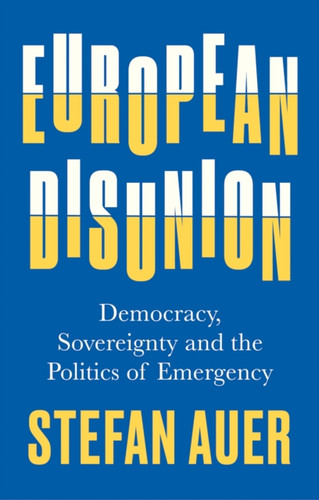
European Disunion: Democracy, Sovereignty and the Politics of Emergency
C Hurst & Co Publishers Ltd
£25.00
£21.11
(No reviews yet)

Write a Review
C Hurst & Co Publishers Ltd
European Disunion: Democracy, Sovereignty and the Politics of Emergency
The European Union means many different things to its many peoples. In Germany, for example, the European project was conceived mainly as post-national, or even post-sovereign. In France, by contrast, President Emmanuel Macron has pursued the vision of a sovereign Europe; that is, an EU that would become a formidable geopolitical actor. Yet, instead, Europe has struggled to ascertain its values abroad and even domestically, facing a sovereignist rebellion from its newer member states, such as Hungary and Poland, and the departure of Britain. The eurozone crisis has undermined the EU''s economic credentials, the refugee crisis its societal cohesion, the failure to stand up to Russia its sense of purpose, and the Covid-19 pandemic its credibility as a protector of European citizens. The key argument of this book is that the multiple crises of the European project are caused by one underlying factor: its bold attempt to overcome the age of nation-states. Left unchecked, supranational institutions tend to become ever more bureaucratic, eluding control of the people they are meant to serve. The logic of technocracy is thus pitted against the democratic impulse, which the European Union is supposed to embody. Democracy in Europe has suffered as a result.
‘[A]n astute observer of the bloc’s institutional dynamics.’
‘A stirring, extremely pertinent wakeup call.’
''Written with an impressive historical sensitivity, this is an incisive account of where the European Union fails and why it does. Auer succeeds in what he sets out to do: he puts politics back into the study of European politics.''
''From one of the most incisive and perceptive critical voices in EU studies, this brilliant book is eurosceptic in the best sense of the word: sympathetic to the democratic aims of the EU, but sceptical about its orientation, modus operandi and achievements.''
‘European disunion provides a valuable reminder that none of the fundamental problems with European integration have thus been solved and that new ones have been created in recent decades.’
''One of the most thorough and interesting revisionist critiques of the European project... This is a powerful argument, based on thorough research and delivered in elegant, succinct prose... Auer has put his finger on a deep sore on Europe''s body politic.''
‘A breath-taking journey into the depths of the EU, its levels of governance, its successes, failures, fortes, and weaknesses.’
''Distinguished by its broad scope and bracing analysis of the limits of integration, Auer''s book tackles big questions about contemporary EU politics with an impressive depth of field.''
''Weaving together empirical narrative and philosophical insight, Auer offers us a deep dive into the foundational underpinnings of the EU’s crisis-driven malaise. A precious contribution to our European debates.''
''A passionate book that recalls the noble beginning of the European project, but then mercilessly uncovers decades of errors, empty promises, failures and obfuscations. The message: we can only move forward if we concede this history. "Wir schaffen das"? We have to work at it!''
The European Union means many different things to its many peoples. In Germany, for example, the European project was conceived mainly as post-national, or even post-sovereign. In France, by contrast, President Emmanuel Macron has pursued the vision of a sovereign Europe; that is, an EU that would become a formidable geopolitical actor. Yet, instead, Europe has struggled to ascertain its values abroad and even domestically, facing a sovereignist rebellion from its newer member states, such as Hungary and Poland, and the departure of Britain. The eurozone crisis has undermined the EU's economic credentials, the refugee crisis its societal cohesion, the failure to stand up to Russia its sense of purpose, and the Covid-19 pandemic its credibility as a protector of European citizens. The key argument of this book is that the multiple crises of the European project are caused by one underlying factor: its bold attempt to overcome the age of nation-states. Left unchecked, supranational institutions tend to become ever more bureaucratic, eluding control of the people they are meant to serve. The logic of technocracy is thus pitted against the democratic impulse, which the European Union is supposed to embody. Democracy in Europe has suffered as a result.
- | Author: Stefan Auer
- | Publisher: C Hurst & Co Publishers Ltd
- | Publication Date: May 12, 2022
- | Number of Pages:
- | Language:
- | Binding: Hardback
- | ISBN-13: 9781787386846
- | ISBN-10: 1787386848
- Author:
- Stefan Auer
- Publisher:
- C Hurst & Co Publishers Ltd
- Publication Date:
- May 12, 2022
- Binding:
- Hardback
- ISBN-13:
- 9781787386846
- ISBN10:
- 1787386848